'Learning by Design' Pedagogy
Kalantzis and Cope (2012) suggest the idea of 'knowledge processes'. These provide "... four foundational types of thinking-in-action, four things you can do to know" (p.356).
The four 'knowledge processes' that Kalantzis and Cope (2013) outline are:
1. Experiencing;
2. Conceptualising;
3. Analysing; and
4. Applying.
Each of the four ‘knowledge processes’ have been divided into two ‘knowledge sub-processes’. These are:
1. Experiencing - the known, and the new;
2. Conceptualising - by naming, and with history;
3. Analysing - functionally, and critically;
4. Applying - appropriately, and creatively.
Kalantzis and Cope (2012) define each of the ‘knowledge processes’ as:
“Experiencing:
- the known – learners bring to the learning situation perspectives, objects, ideas, ways of communicating and information that are familiar to them, and reflect upon their own experiences and interests
- the new – learners are immersed in new situations or information, observing or taking part in something that is new or unfamiliar
Conceptualising:
- by naming – learners group things into categories, apply classifying terms, and define these terms
- with theory – learners make generalisations by connecting concepts and developing theories
Analysing:
- functionally – learners analyse logical connections, cause and effect, structure and function
- critically – learners evaluate their own and other people’s perspectives, interests and motives
Applying:
- appropriately – learners try their knowledge out in real-world or simulated situations to see whether it works in a predictable way in a conventional context
- creatively – learners make an intervention in the world which is innovative and creative, distinctively experessing their own voices or transferring their knowledge to a different context” (p.357).
The ‘knowledge processes’ allow students to learn and develop knowledges through activities created to align with the principles of the ‘knowledge processes’ and ‘sub-processes’, as outlined above. By considering which knowledge processes are to underpin their lesson, teachers are able to tailor activities to glean the most applicable range and learning structure for both students and curriculum. Through the use of the ‘Learning by Design’ pedagogy, which encourages teachers to design and adopt specific learning programs, students will ultimately be exposed to learning experiences that will develop deeper learning and higher order thinking skills with regards to their English and literacy development.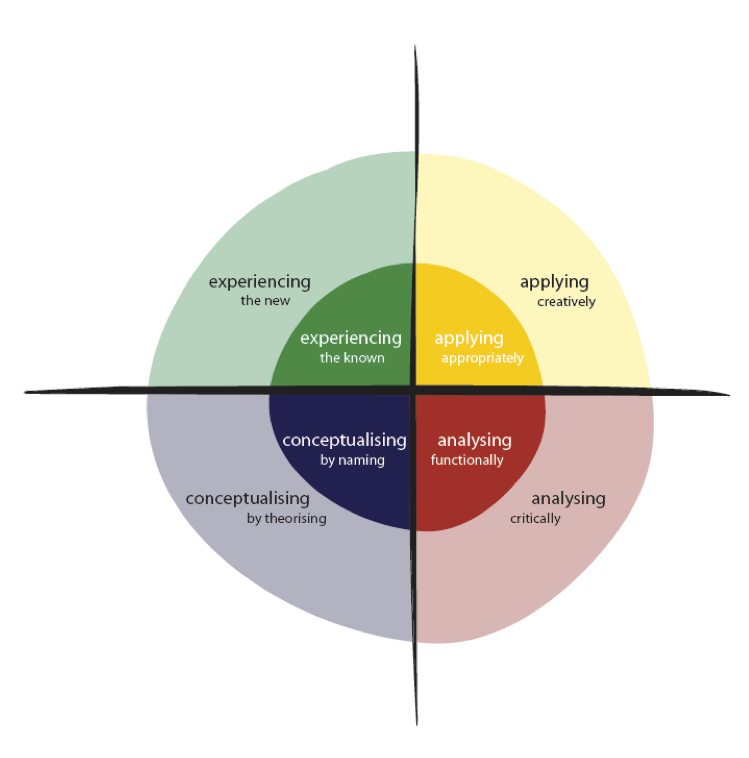
Figure 1: The knowledge processes (Kalantzis & Cope, 2012, p. 358).
